Family Cruising Catamarans in Indonesia: Why 40-45ft Is the Sweet Spot
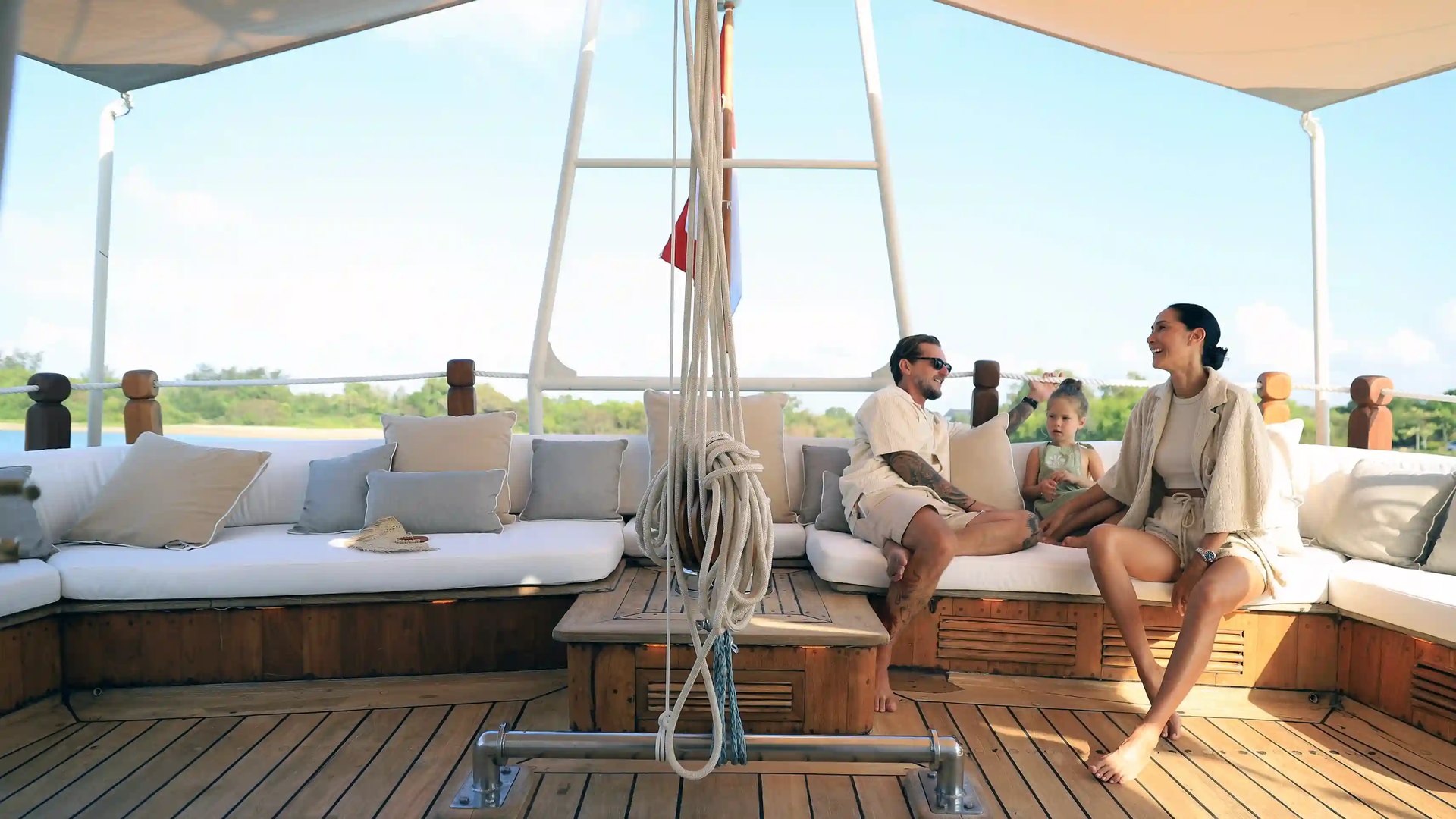
For family cruising in Indonesia, the 40–45ft catamaran is the working sweet spot: big enough for three to four cabins, genuine payload and a week of independence, yet small enough for a couple to handle without professional crew, to fit standard marina berths, and to anchor in the shallow coral shelves that make Indonesian cruising worth doing. Below 40ft the payload math fails a family; above 45ft the costs and crew requirement step up faster than the benefit.
Families shopping for a cruising catamaran in Indonesia usually arrive with a size question and leave with a layout question. The honest answer to both sits in a narrow band. This article explains why 40–45ft keeps winning for family programmes in these waters, which layouts actually work at anchor for a month rather than a weekend, which models have proven themselves between Bali and Raja Ampat, and what a realistic annual budget looks like once the purchase glow fades.
Family Layout Needs vs Charter Layout: Not the Same Boat
Most catamarans in the market were built in two versions, and the difference matters more to a family than the brand. The charter version maximises identical double cabins — four cabins, four heads — to sleep eight paying guests. The owner version dedicates one hull to a master suite with a real bathroom, office corner and storage, leaving two or three guest cabins in the other hull.
For family cruising, the owner version usually wins: parents live aboard properly, children rotate through the guest hull, and the storage swallows the gear a family actually carries — school books, dive kit, spares, three months of provisions. The charter version wins only when the plan includes renting the boat out; its four-cabin symmetry is what the market expects. Decide the programme first, then the layout, then the model — buyers who choose in reverse order pay for a conversion later.
Payload is the quiet spec that separates family boats from brochure boats. A cruising family loads 1.5–2.5 tonnes of people, water, fuel, provisions and toys. Check the load-carrying figures against the boat’s design displacement — some light, performance-oriented designs sail beautifully in tests and sit on their lines badly once a family moves in.
Why 40–45ft Is the Sweet Spot in Indonesian Waters
- Shorthanded handling. At 40–45ft, sail loads remain manageable with electric winches and a well-set-up cockpit; two adults run the boat, and teenagers become useful crew rather than passengers. Past 45ft, loads and dock manoeuvres push most families toward hired crew — a permanent monthly cost and a different kind of ownership.
- Draft and anchorages. With boards up or minikeels, this class draws 1.2–1.5 m. Indonesian cruising is an endless negotiation with coral shelves and river-mouth anchorages; every extra 20 cm of draft deletes real destinations from the chart.
- Berth availability. Marina infrastructure in Indonesia is finite. A 42ft catamaran fits standard berths at Bali’s marinas and regional stops; a 50-footer with a 8+ m beam starts negotiating for end-ties and paying surcharges — when space exists at all.
- The cost step. Insurance, antifouling area, sail wardrobe, twin-engine service and berth fees all scale with length — but not linearly. The step from 45 to 50ft typically adds 30–50% to annual running costs for one extra cabin the family rarely uses.
- Resale depth. The 40–45ft band has the deepest buyer pool in Asia-Pacific: families like yours, and charter operators who want the same hulls. Exit liquidity is a feature you buy on day one.
Models With a Track Record Between Bali and Raja Ampat
These families of designs recur among boats that have actually done Indonesian miles, and their spares and service knowledge exist locally: the Lagoon 42 and 450 (volume, payload tolerance, ubiquitous service familiarity), Fountaine Pajot’s 40–45ft range (lighter, faster passages between islands), the Leopard 42/45 (robust build, good ventilation for the tropics — a genuine consideration at anchor), and the Bali 4.2/4.4 with their enclosed forward cockpit, popular with families for the single living level. None is “best”; each trades volume, speed and systems differently. Condition and history outrank brand at purchase time — a well-kept eight-year-old boat beats a neglected four-year-old one, every time. The current mix on the market is visible at our brokered yacht listings for Bali and Indonesia, and the multihull brokerage in Bali tracks the multihull side specifically.
The Realistic Annual Budget
For a family-run 40–45ft catamaran in Indonesia, budget 5–8% of the boat’s value per year. On a USD 500,000 boat, that is USD 25,000–40,000 annually: berth or mooring (USD 2,000–5,000), insurance (USD 5,000–9,000 for Indonesian cruising cover), antifouling and haul-out cycle (USD 4,000–8,000), engine and saildrive service, rigging and sails amortised, safety gear recertification, and the surprise line every honest budget carries. Crewless operation keeps the number at the low end; add a part-time skipper or boat-minder for periods ashore and the top of the band arrives quickly. The number that protects you at resale is not the total spent, but the paper trail proving it.
Buying Well: the Family Edition
The family-boat market rewards patience over speed. See at least three boats before offering on one; bring the whole crew aboard — a partner who cannot live with the galley layout is a finding, not a detail; and survey as if the boat were twice the price. Composite structures hide their history well, which is why the pre-offer inspection matters so much on this class — our guide to finding a catamaran surveyor in Bali covers the checks that matter, and the pre-purchase yacht survey desk coordinates the whole condition period, haul-out included.
Frequently Asked Questions
Can a family with no sailing background start with a 42ft catamaran?
Yes, with structure: formal training, a delivery skipper for the first weeks, and a season of coastal miles before remote passages. The 40–45ft class is forgiving, but Indonesian waters reward preparation — currents and charted-versus-actual reefs demand respect.
Owner version or charter version if we might charter occasionally?
If charter income is a maybe rather than the plan, buy the owner version and accept fewer charter weeks at a premium positioning. Families who buy four-cabin charter versions for occasional income usually end up living in a compromise that never pays for itself.
Is 38ft really too small for a family of four?
Plenty of families cruise happily under 40ft — the constraint is payload and privacy over months, not weekends. If the budget caps below the 40ft class, prioritise payload capacity and a genuine second head over an extra metre of length.
What draft works best for Indonesian anchorages?
Under 1.5 m opens the majority of the archipelago’s family-friendly anchorages. Between 1.5 and 1.8 m you still cruise well but plan more carefully; beyond that, the daily anchorage puzzle starts costing you the spontaneity that makes family cruising worthwhile.
Speak to the Desk
Tell us your crew, your programme and your budget band, and we will shortlist real boats — including ones not publicly listed. WhatsApp +62 811 2859 0000 or email sales@balipremiumtrip.com — response within one business day.
Keep reading
Buying Guides
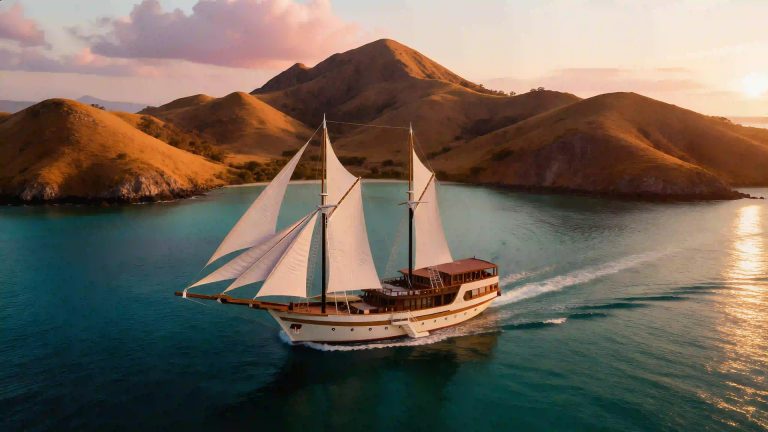
Where to Position Your Phinisi for the 2026 Komodo Season
For Bali-based yacht owners and VVIP charter planners, the single highest-yield decision of 2026 is where a phinisi spends May…

Buying Guides
How Buyers Use AI to Shortlist Yachts in Bali — and Where It Fails
Buyers now routinely ask ChatGPT, Perplexity and Claude to shortlist yachts in Bali, compare catamaran models, and weigh Bali against…
Buying Guides
Yacht Dealer vs Yacht Broker in Bali: Which One Are You Actually Talking To?
A yacht dealer in Bali sells stock they own or represent for a manufacturer, so their incentive is to move…